
I contain multitudes
embrace the contradictions

[Day 2/30 of my 30 day writing challenge]
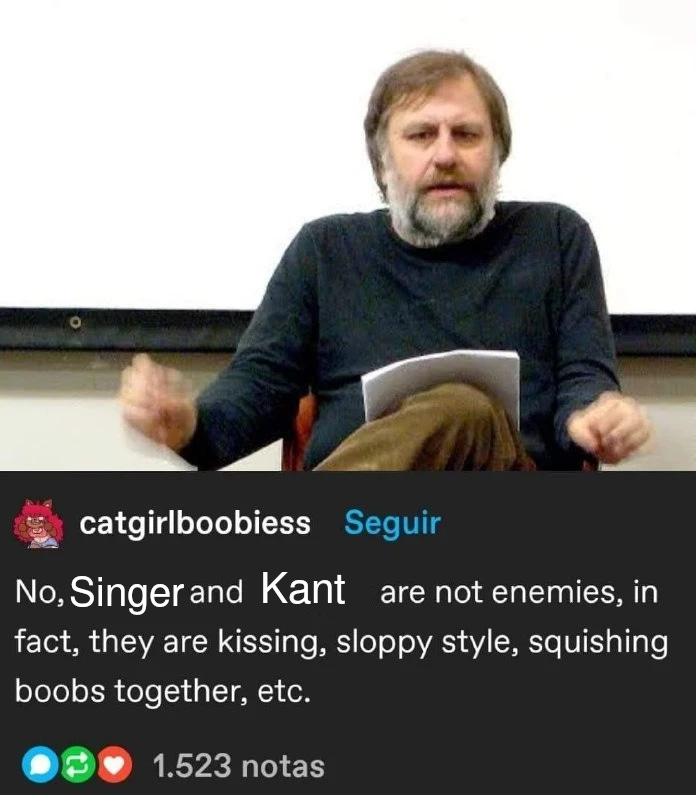
(In this post I zoom in on ethics because that’s just what my mind does1. Before you stop reading, I believe this way of thinking is generally useful and can be applied to things in linear proportion to where they are on the scale of “hard science ←→ philosophy”.)
Once upon a time, In a Berlin hostel, I was, as one does, trying to convince strangers on the virtues of donating to shrimp welfare and utilitarianism.
There was a much older person there slowly shaking his head going “it’s not that simple”. This man spent the last 15 years of his life traveling, couch surfing between random homes in random countries. He’s met more people, seen more countries and generally has more life experience than my undeveloped frontal lobe can fathom. I think about this man a lot. He gnaws at me. The heuristic of “what would an old person say” tells me he is right and I am wrong, yet I, by virtue of being me, think I am right.
Humans are horny for narratives. We always have been. There’s a reason populism and religion are historically successful and seemingly never go out of fashion for long.
The world is sadly completely indifferent to our preference for grand narratives. Meaning is hard to come by, god doesn’t seem very real and worst of all, sometimes there’s no oat milk in the fridge.
You are exceedingly likely to be wrong about a lot of things. You likely believe wrong things all the time and engage in motivated reasoning constantly. This might sound stupid, but when you believe wrong things you aren’t aware that your beliefs are wrong. This is (hopefully) implied by you believing them.
You are, also, exceedingly likely to believe in things for reasons other than their probability of being true. For example, I got very into leftist debate-bro YouTube right after I realized I was transgender. This is not a coincidence. Retrospectively, I believe I did this because it was very comforting to see people make the case that being trans is okay. At the time I of course believed I was doing this because the YouTube debaters I was watching were correct about everything and i was in some epic quest for truth. The worst part is, my mind is complicated! My retrospective analysis of why I did this could also be wrong or incomplete!
Even now, it will be incredibly hard to sway me any way in the direction of “trans people should be eradicated from public life” compared to the median voter. I have vested interests.
You don’t even have to look this far, most people are not vegan because they were not raised vegan. Pretending to be immune to this is futile. YWNBTTSM2
So, my priors are likely shit, I engage in motivated reasoning, and I am intellectualy humble enough to admit I am (at least a bit) young and stupid.3 It is likely I won’t believe in 2 years (let alone 20 years) what I believe now, yet I must act now.
There are a lot of good arguments
The ethical emotivists are kinda spitting
My conception of ethics was destroyed some 2 odd years ago by a youtube short (yes) of Alex O’Connor making a very convincing argument for ethical emotivism.
The argument is quite simple and can be summarized as “any theory that is accepted or rejected based on an evaluation against intuition is just intuition with extra steps”. This is obviously true, and it’s also true that you’d be incredibly hard pressed to find someone who doesn’t at some point end up weighing their conclusions against intuition. After all, what else is a reductio ad absurdum in ethics4 if it’s not “your conclusion is so intuitively abhorrent it can’t possibly be true”.
The utilitarians are (really) kinda spitting
See the great Bentham's Bulldog and everything ever written by Peter Singer.
The nihilists are kinda spitting
Ethics might not matter. Rabbit-hole too deep, abort.
So what gives?
I could go on, but won’t for the sake of brevity. The point is that incredibly strong arguments can be made for different, contradictory, beliefs.
Worst of all, the set of “every good argument you have ever heard for X” is a subset of “all good arguments for X”.
Clearly it’s impossible for all of these theories of ethics to be true at the same time. Yet today I’m trying to make a simple case: reject the human urge to form a narrative, don’t reject any of these ideas unless you believe you have very good reasons, and even then, tread lightly. Embrace the contradictions.
A lot of people are very smart and have done a lot of thinking. They’ve arrived at radically different conclusions on how you should act and what is right and wrong.
Then how do I act?
But then, how should I act? I propose a mental model I dub “The council of experts“ until we figure out what the fuck is going on.
What I’m saying is every time when faced with a moral dilemma, you should imagine asking a council of ethics experts with radically different beliefs, and act according to their consensus, weighted for how likely you think each expert is right, adjusted for the odds of your own stupidity.56
The weighting should be according to how convincing you think each theory is, but not by too much, since you’re probably a bit wrong and stupid.
If you want to be all rationalist loser about it, my argument can be boiled down to making the case that you should be bayesian with regards to your own beliefs.
This is also why I believe living nihilisticly is stupid. Unless you literally believe nihilism has a 100% chance of being right, you should dismiss it almost completely.
but the shrimp
It’s true that this weakens positions that I strongly believe in personally, like veganism & effective altruism (beliefs limited almost entirely to utilitarians) but as explained previously, dismissing this theory because of that would be equivalent to deferring to intuition again.
I keep saying “I” and not “you” in this essay. A lot of this probably applies to you as well because we both have the same thinking equipment to reason.7
I don’t really have a cute oneliner to end this one but I hope you have a wonderful day :)
And because it’s just very important
You will never be the truth seeking machine. Especially not the people that advertise themselves as such.
There are many other reasons too. Human beings are bad at coming to conclusions. There’s a reason the debate meta shifts depending on whether you are in public or not. Human memory is also notoriously unreliable. I could go on.
I guess it can also be a literal contradiction but yeah.
I’m not saying this is where “true ethical way to live” lies, just that this might be the best way to decide what to do with limited/bad information.
There’s also an argument to be made that you should weigh how much they think it matters. When following this line of reasoning there may be hope for the shrimp after all.
brains